

Maitake Mushroom: Traditional Wellness Ingredient With Growing Research Interest
Published June 2026 · 8 min read
The Dancing Mushroom
Maitake (Grifola frondosa) is a large, layered polypore mushroom that grows at the base of oak, elm, and maple trees across temperate forests in Japan, China, Europe, and eastern North America. In the West, foragers know it as "hen of the woods" because its overlapping, fan-shaped caps resemble the ruffled feathers of a nesting hen. In Japan, the name maitake translates to "dancing mushroom"—a reference to the joy foragers expressed upon discovering it in the wild. It was that prized.
Maitake sits at an interesting crossroads: deep traditional roots, a genuinely distinctive bioactive compound (D-fraction), a growing body of preclinical research, and honest gaps between what that research suggests and what has been confirmed in healthy humans. This article tries to walk that line with integrity.
Traditional Use in Japanese Wellness Practices
Maitake has been used in Japanese wellness traditions for centuries, valued as both a culinary delicacy and a functional ingredient. Japanese herbalists traditionally recommended it to support general vitality and immune wellness, and it was considered a tonic food—something consumed regularly to maintain balance rather than taken as a targeted remedy.
Unlike some functional mushrooms whose traditional use is wrapped in mysticism, maitake's history is comparatively grounded. It was a prized food first, and a wellness ingredient second. Japanese households in the mountainous Tohoku region prized wild maitake so highly that foragers reportedly guarded the locations of their trees as family secrets, passed down across generations. It was integrated into daily cooking and dietary practice, not reserved for special preparations. That tells you something about how Japanese culture understood it: as a foundational ingredient you wove into ordinary life over long periods, not an exotic intervention.
D-Fraction: Maitake's Signature Compound
Every functional mushroom has a bioactive signature—the compound or compound class that distinguishes it from other species. For Lion's Mane, it's hericenones and erinacines. For Reishi, triterpenoids. For maitake, the defining compound is D-fraction, a protein-bound beta-glucan extract isolated and characterized by Japanese researcher Hiroaki Nanba in the 1980s.
Beta-glucans are polysaccharides found in fungal cell walls and are the most broadly studied class of bioactive compounds in functional mushrooms. What makes maitake's D-fraction (sometimes called MD-fraction) notable is its particular molecular structure—a branched beta-1,6-glucan with beta-1,3-glucan side chains—which laboratory research suggests it interacts with immune cell receptors in ways that differ from the beta-glucans in other species.
The preclinical research on D-fraction is genuinely interesting. In vitro and animal studies have explored its potential to modulate natural killer (NK) cell activity and support other immune cell markers.1 A review in the Annals of Translational Medicine examined the immunomodulatory properties of maitake and shiitake extracts, noting favorable effects on immune markers in laboratory settings.2 These findings have driven ongoing scientific interest in maitake as a functional ingredient.
What the Research Actually Shows—and What It Doesn't
Here's where intellectual honesty requires us to slow down.
Much of the most frequently cited maitake research falls into categories that don't translate cleanly into consumer supplement marketing for healthy adults. The preclinical literature—cell culture studies and animal models—is substantial and suggests that maitake beta-glucans may influence immune cell activity. But preclinical research is the starting line of evidence, not the finish line. Compounds that show effects in a petri dish or a mouse model fail to replicate in human trials far more often than they succeed.
The human research that does exist on maitake is limited in scope. Some studies have examined it in disease-specific clinical contexts that are outside the boundaries of what can or should be communicated in healthy consumer marketing. Other studies have been small, short in duration, or lacked placebo controls. A small 2009 pilot study explored maitake D-fraction's effects on immune markers in a specific clinical population, but the sample size and study design make broad generalizations inappropriate.3
What we can say honestly: maitake contains well-characterized beta-glucan compounds that have attracted serious research interest for their potential immune-modulating properties. What we can't say: that this promise has been confirmed in large, well-designed trials in healthy adults. That gap isn't an indictment of maitake. It's simply where the evidence stands. Most functional mushrooms face similar gaps, and pretending otherwise does consumers a disservice.
Nutritional Profile: What Maitake Delivers Beyond Beta-Glucans
Separate from the D-fraction research, maitake is a genuinely nutrient-dense food. A 100-gram serving of raw maitake provides approximately 31 calories along with meaningful amounts of B vitamins (particularly niacin and riboflavin), potassium, copper, and dietary fiber. It's also one of the few natural food sources of vitamin D2 when exposed to UV light, a property it shares with shiitake and a handful of other species.
This nutritional density is part of why maitake has persisted as a valued culinary ingredient for centuries, independent of any supplement claims. In a supplement context, the beta-glucan content is the primary point of interest, but the broader nutrient matrix provides additional context for why traditional cultures valued this mushroom as a daily food.
Immune Marker Studies: A Closer Look
The immune-related research on maitake polysaccharides, particularly D-fraction, has focused on their interaction with innate immune cells. Laboratory studies have examined whether maitake beta-glucans bind to pattern recognition receptors on macrophages and dendritic cells, potentially influencing cytokine production and NK cell activity.1 These mechanisms are biologically plausible and consistent with what we know about beta-glucans from other fungal species. However, biological plausibility and confirmed benefit are different things. The immune system is extraordinarily complex, and effects observed in isolated cell cultures don't reliably predict outcomes in a living human body. This challenge is shared across functional mushroom research, not unique to maitake, but it needs to be stated plainly.
Why Maitake Works Well in Multi-Mushroom Blends
One of the strongest arguments for maitake as a supplement ingredient isn't that it's a standalone superstar. It's that its bioactive profile complements other functional mushrooms in meaningful ways. Different mushroom species produce beta-glucans with different molecular structures, branching patterns, and molecular weights. Maitake's D-fraction represents a structurally distinct type that adds diversity to a multi-species blend. Traditional Japanese and Chinese formulations frequently combined multiple mushroom species rather than relying on single ingredients. That reasoning—a broader spectrum of bioactive compounds may offer more comprehensive support than any single compound—hasn't been rigorously validated in human trials, but it's consistent with how traditional practitioners approached these organisms for centuries.
In the Pilly Labs 10-Mushroom Blend, maitake is one of ten species contributing to a broad-spectrum beta-glucan profile alongside Lion's Mane, Reishi, Cordyceps, Chaga, Shiitake, Turkey Tail, and others. That diversity of beta-glucan structures is the functional rationale for multi-mushroom blends.
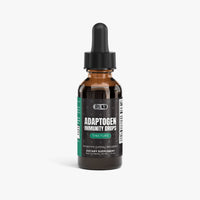
In the Adaptogen Vitality Gummies, it is included at 87 mg per serving alongside ashwagandha and other adaptogenic ingredients to support daily vitality. In the Adaptogen Immunity Drops, maitake is part of an immune complex pairing its beta-glucans with complementary mushroom and botanical ingredients. In each case, this mushroom contributes its distinctive compound profile to a broader formulation rather than carrying the entire formula alone.
The Honest Summary
Maitake is a mushroom with centuries of traditional use as a valued food and wellness ingredient in Japanese culture. It contains D-fraction, a structurally distinctive beta-glucan that has generated genuine research interest, particularly around immune marker modulation. The preclinical evidence is substantial and the mechanisms are biologically plausible. What the evidence hasn't yet established is whether those findings translate into meaningful, measurable benefits in healthy adults taking it as a daily supplement.
That gap is real, and shared by most functional mushrooms on the market today. The honest approach is to respect the depth of maitake's traditional history, acknowledge the scientific interest in its bioactive compounds, and be transparent about the distance between preclinical promise and human proof. If you choose to include maitake in your daily routine, you're making a bet that aligns with centuries of traditional use and a growing—if still early—body of scientific inquiry. That's a reasonable bet. Just make it with clear eyes.
References
- Kodama N, Komuta K, Nanba H. Can maitake MD-fraction aid cancer patients? Altern Med Rev. 2002;7(3):236–239.
- Vetvicka V, Vetvickova J. Immune-enhancing effects of Maitake (Grifola frondosa) and Shiitake (Lentinula edodes) extracts. Ann Transl Med. 2014;2(2):14. doi:10.3978/j.issn.2305-5839.2014.01.05
- Deng G, Lin H, Seidman A, et al. A phase I/II trial of a polysaccharide extract from Grifola frondosa (Maitake mushroom) in breast cancer patients: immunological effects. J Cancer Res Clin Oncol. 2009;135(9):1215–1221. doi:10.1007/s00432-009-0562-z
- Konno S. Maitake D-Fraction: apoptosis inducer and immune enhancer. Altern Complement Ther. 2001;7(4):236–239.