
Mushroom Coffee: What the Research Actually Says About Lion's Mane and Focus Support
Published June 2026 · 9 min read
Here's the uncomfortable truth about mushroom coffee: most of what you've read about it is either oversimplified marketing or cynical dismissal. The actual science sits in an interesting middle ground that neither camp wants to talk about.
Lion's mane mushroom (Hericium erinaceus) has real human studies behind it. Not dozens—but enough to form a reasonable picture. Caffeine has centuries of use and a mountain of research. The question isn't whether either ingredient "works" in isolation. The question is: what happens when you combine them in a morning ritual, at the doses most products actually deliver, for the kind of cognitive tasks you actually perform?
That's what this article is about. No hand-waving. No cherry-picked animal studies presented as proof. Just the human evidence, the honest dose math, and what it actually means for your morning.
What "Focus Support" Actually Means in Evidence Terms
When supplement brands say "focus," they're usually gesturing at a collection of measurable cognitive outcomes: sustained attention, working memory, processing speed, and resistance to distraction. In clinical research, these are tested with standardized tools—the Mini-Mental State Examination (MMSE), the Benton Visual Retention Test, word recall tasks, and reaction-time measurements.
This matters because "I feel more focused" is a real subjective experience, but it's different from "this ingredient improved scores on a validated cognitive test in a controlled trial." Both are worth discussing. But you should know which one you're looking at when a brand makes claims.
The honest framing: the ingredients in mushroom coffee may support aspects of cognitive function based on limited but encouraging human research. That's a meaningful statement. It's just not the same as "mushroom coffee makes you focused."
Lion's Mane: The Human Studies, Honestly Assessed
The lion's mane research that matters for cognitive claims comes from a small but growing body of human trials. Here's what we actually have:
Mori et al. (2009) — The Study Everyone Cites
Thirty Japanese men and women aged 50–80 with mild cognitive impairment took 3,000 mg/day of lion's mane tablets or placebo for 16 weeks. The lion's mane group showed statistically significant improvements on the Revised Hasegawa Dementia Scale at weeks 8, 12, and 16 compared to placebo. Scores declined after supplementation stopped.
What to note: the population was older adults with existing mild cognitive impairment, not healthy younger adults looking for a productivity boost. The dose was 3,000 mg/day. And the sample size was small. This is a promising signal, not a definitive answer. (We break down this study in detail here.)
Saitsu et al. (2019) — Healthy Older Adults
This study gave 31 participants aged 50+ either lion's mane supplements (3,200 mg/day of lion's mane fruit body tablets) or placebo for 12 weeks. The supplement group showed improvements on the MMSE, with particular gains in a cognitive sub-score. Notably, participants with lower baseline scores showed the most improvement.
What to note: again, an older population. The dose was substantial—3,200 mg/day. The study was small and relatively short. Encouraging, but not conclusive.
Li et al. (2020) — A Different Angle
This study examined lion's mane supplementation in a broader wellness context. While it added to the overall picture of lion's mane as a bioactive mushroom with measurable effects in humans, the study design and endpoints differed from the cognitive-focused trials above.
The collective picture: small human trials suggest lion's mane may support cognitive function, particularly in older populations. The mechanism is thought to involve nerve growth factor (NGF) stimulation—well-demonstrated in cell and animal studies, less directly confirmed in humans. Research is encouraging but still in early stages.
The Dose Problem Nobody Talks About
This is where most mushroom coffee marketing falls apart, and where we need to be straight with you.
The human studies showing cognitive benefits used lion's mane at 1,000 to 3,200 mg per day. Most mushroom coffee products deliver somewhere between 300 and 500 mg per serving. Some don't disclose the amount at all, hiding behind "proprietary blends."
That's a significant gap. A single serving of most mushroom coffees delivers roughly 10–30% of the dose used in the clinical research.
There are a few honest ways to think about this:
- Sub-clinical doses may still contribute meaningfully over time. Most studies measure acute or short-term effects. Daily consumption over months hasn't been well-studied at lower doses. We don't know the dose-response curve with precision.
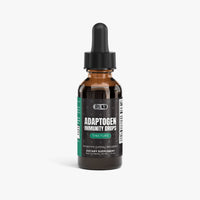
- Mushroom coffee is rarely someone's only source. People often combine it with standalone lion's mane supplements, like concentrated lion's mane tinctures, to get closer to studied doses.
- The ritual itself has value. Replacing a jittery triple espresso habit with a more intentional morning drink has real-world benefits that don't require clinical-dose lion's mane.
Any brand that implies their mushroom coffee delivers clinical-dose lion's mane in a single cup is misleading you. We think you deserve the real math.
Get the Free Mushroom Research Guide
A plain-English summary of what the research actually says about each functional mushroom. Evidence-tiered. No hype. No spam.
No spam. Unsubscribe anytime. We respect your inbox.
Caffeine: The Ingredient That Actually Has Mountains of Evidence
Let's be real: the most well-studied ingredient in mushroom coffee is the coffee itself.
Caffeine's effects on attention, alertness, reaction time, and sustained focus are supported by hundreds of human studies. At 75–200 mg (roughly one cup of coffee), caffeine consistently improves vigilance, simple reaction time, and subjective alertness. The evidence is so strong it barely needs citing—but if you want a comprehensive review, Einother and Giesbrecht (2013) in Psychopharmacology is a good starting point.
What makes the mushroom coffee proposition interesting isn't replacing caffeine's effects. It's the idea that complementary ingredients might smooth out caffeine's rough edges (the jitters, the crash) or add cognitive dimensions that caffeine alone doesn't cover.
This is where L-tyrosine enters the conversation—an amino acid with its own body of research on focus under demanding conditions.
The Caffeine + Lion's Mane Combination Rationale
No published human study has tested caffeine and lion's mane together as a combination. That's an important caveat. The rationale for combining them is based on complementary mechanisms, not direct combination research:
- Caffeine works primarily through adenosine receptor antagonism—it blocks the "sleepy" signal, keeping you alert. Its effects are acute and well-characterized.
- Lion's mane is thought to support nerve growth factor production—a longer-term, structural mechanism rather than an acute stimulant effect.
The theoretical appeal: caffeine handles the immediate alertness, while lion's mane may support underlying neural health over time. One works in minutes; the other, potentially, over weeks and months. They're operating on different timescales and through different pathways.
Is this proven? No. Is it a reasonable hypothesis supported by the individual ingredient research? Yes. That's the honest answer.
What About the Other Mushrooms?
Most mushroom coffees don't stop at lion's mane. You'll often see chaga, cordyceps, reishi, and turkey tail on labels. Here's an honest tier list:
Cordyceps
Some human evidence for physical performance and energy metabolism, though the research is mixed. The most-cited studies (Yi 2004, Chen 2010) show modest effects. Reasonable to include, but the evidence base is softer than lion's mane for cognitive outcomes.
Chaga and Reishi
Traditionally valued in Eastern wellness practices for centuries. Modern human clinical evidence is limited. These mushrooms have interesting bioactive compounds in lab studies, but making specific cognitive or health claims based on current human data would be premature. They're best understood through the lens of traditional use.
What to Look For
When evaluating mushroom coffee products, focus on: fruiting body vs. mycelium on grain (fruiting body concentrates more bioactive compounds), extraction method, disclosed ingredient amounts, and third-party testing. (We compare specific products in our 2026 buyer's guide.)
The Practical Case for Mushroom Coffee
Strip away the marketing and the science for a moment. Here's what mushroom coffee actually delivers in practice:
- A ritualized caffeine reduction. Most mushroom coffees deliver 50–80% of the caffeine in a standard cup. For people who are caffeine-sensitive or trying to moderate intake, that's practical value.
- A consistent daily dose of functional mushrooms. Even if the per-serving amount is below clinical study doses, daily consistency is how most traditional use patterns work.
- An intentional morning ritual. The act of choosing a more deliberate morning drink, as part of a broader morning routine, has its own psychological value.
None of these require exaggerated claims. They're real, practical benefits that stand on their own.
The Bottom Line
Mushroom coffee isn't snake oil and it isn't a miracle. It's a reasonable daily ritual built on one very well-studied ingredient (caffeine), one ingredient with promising but limited human evidence (lion's mane), and several traditionally valued mushrooms still awaiting robust clinical validation.
If you go in with realistic expectations—appreciating the caffeine, valuing the daily mushroom intake as a long-term investment, and not expecting a single cup to replicate clinical study doses—it's a genuinely useful addition to a morning routine.
The brands worth your money are the ones that tell you exactly what's in the cup, at what amounts, and don't pretend a 300 mg mushroom blend is equivalent to 3,000 mg used in research. Transparency is the baseline. Everything else is marketing.
Full Transparency, Every Cup
Pilly Labs Premium Mushroom Coffee discloses our exact 70/15/15 ratio of lion's mane, cordyceps, and chaga—plus per-serving amounts. No proprietary blends. No guessing.
See the Full LabelReferences
Note: These citations reflect ingredient-level research, not finished-product claims. Results from individual studies may not directly apply to specific supplement formulations.
- Mori K, Inatomi S, Ouchi K, Azumi Y, Tuchida T. Improving effects of the mushroom Hericium erinaceus on mild cognitive impairment: a double-blind placebo-controlled clinical trial. Phytother Res. 2009;23(3):367-372.
- Saitsu Y, Nishide A, Kikushima K, Shimizu K, Ohnuki K. Improvement of cognitive functions by oral intake of Hericium erinaceus. Biomed Res. 2019;40(4):125-131.
- Li IC, Lee LY, Tzeng TT, et al. Neurohealth properties of Hericium erinaceus mycelia enriched with erinacines. Behav Neurol. 2018;2018:5802634.
- Einother SJ, Giesbrecht T. Caffeine as an attention enhancer: reviewing existing assumptions. Psychopharmacology. 2013;225(2):251-274.
- Lai PL, Naidu M, Sabaratnam V, et al. Neurotrophic properties of the lion's mane medicinal mushroom Hericium erinaceus. Int J Med Mushrooms. 2013;15(6):539-554.
Not sure which mushroom product is right for you?
Take the 60-Second "Find Your Mushroom Match" Quiz →Want More Like This?
Evidence-based mushroom research and routine tips. Delivered weekly. No fluff.
Join 2,000+ readers. Unsubscribe anytime.
RELATED PRESS RELEASE
Yahoo Finance Pilly Labs Formulates Top Mushroom Extract Gummies for Focus, Anxiety, Weight