
![Chaga vs. Reishi: Same Hype, Very Different Mushrooms [2026]](http://pillylabs.com/cdn/shop/articles/blog-featured-594826035454.png?v=1781227391&width=1100)
Two Mushrooms That Get Confused for the Same Thing
If you've spent any time in the functional mushroom world, you've probably seen Chaga and Reishi mentioned in the same breath—as though they're interchangeable. They're not. They come from different parts of the world, contain different compounds, and the traditional wellness practices that valued them for centuries used them for different purposes.
Both are non-culinary mushrooms consumed for wellness rather than flavor. Both contain polysaccharides. Both appear in immune-support products. But the overlap is narrower than it looks. Chaga (Inonotus obliquus) and Reishi (Ganoderma lucidum) are better understood as complements than competitors—two ingredients that occupy different wellness lanes and may cover more ground together than either one does alone.
Different Origins, Different Traditions
Chaga: The Siberian Staple
Chaga isn't technically a mushroom in the conventional sense. It's a sterile conk (a dense, wood-like growth of fungal tissue) that grows on living birch trees in cold northern climates. Its traditional use is rooted in Siberian, Russian, Finnish, and Northern European folk wellness, where it was prepared as a dark, earthy tea consumed daily as a general tonic. In parts of Siberia, Chaga tea was a household staple—not medicine, but a daily wellness habit passed down across generations.
The traditional framing centered on resilience and vitality—supporting everyday well-being through long, harsh winters. The emphasis was less on calming the mind and more on fortifying the body.
Reishi: The Lingzhi of Traditional Chinese Medicine
Reishi occupies a fundamentally different cultural position. Known as lingzhi ("divine mushroom") in Chinese, Reishi has been documented in Traditional Chinese Medicine (TCM) texts for over 2,000 years. The Shennong Ben Cao Jing, one of the oldest Chinese pharmacopoeias, classified it as a "superior" herb—safe for long-term use and traditionally valued for supporting longevity and calm. In Japanese kampo medicine, it was called mannentake, the "10,000-year mushroom."
Where Chaga was the everyday resilience drink, Reishi was the contemplative tonic—centered on what TCM practitioners describe as "calming the shen," or settling the spirit. Wild Reishi was rare and expensive, reserved for royalty and scholars. Its traditional reputation was adaptogenic: supporting the body's capacity to maintain balance during occasional stress.
Different Compounds, Different Strengths
The biochemical differences between Chaga and Reishi explain why these mushrooms have historically been used for different purposes.
Chaga's Signature Compounds
Polysaccharides (including beta-glucans): Chaga is exceptionally rich in polysaccharides—complex carbohydrate molecules that have been extensively studied in laboratory settings for their interactions with immune cells. When a Chaga extract is standardized to 40% polysaccharides, it means the concentration has been analytically verified, giving you a measurable quality benchmark rather than a guess.1
Betulinic acid: This is Chaga's most distinctive compound—a triterpenoid absorbed from the birch bark on which Chaga grows. No other commonly supplemented mushroom contains meaningful levels of betulinic acid, because no other commonly supplemented mushroom grows on birch trees. In vitro research has explored betulinic acid's biological properties, though human bioavailability remains an area of ongoing investigation.2
Melanin: Chaga's dark exterior is rich in melanin pigments. Laboratory measurements of its antioxidant capacity (ORAC values) are notably high, which is why Chaga tends to be framed around antioxidant support. A necessary caveat: the USDA withdrew the ORAC database in 2012 because test-tube antioxidant measurements don't reliably predict antioxidant effects in the human body. Interesting data—not proof of human benefit.
Reishi's Signature Compounds
Triterpenes (ganoderic acids): This is where Reishi distinguishes itself most clearly. Over 100 different triterpenes have been identified in Reishi, with ganoderic acids being the most studied. These are the compounds most directly associated with Reishi's traditional calming applications. They are alcohol-soluble (not water-soluble), which is why dual-extraction methods—hot water plus alcohol—are considered important for capturing Reishi's full bioactive profile.3
Polysaccharides (including beta-glucans): Like Chaga, Reishi contains polysaccharides with laboratory-demonstrated interactions with immune cells. However, Reishi's polysaccharide profile differs structurally from Chaga's, and the two shouldn't be treated as identical simply because they share a compound class name.
Peptidoglycans: Additional bioactive compounds that contribute to Reishi's complex chemical profile. In total, more than 400 bioactive compounds have been identified in Reishi.
The summary: Chaga leans toward polysaccharides, betulinic acid, and melanin. Reishi leans toward triterpenes, polysaccharides, and peptidoglycans. There is overlap in the polysaccharide category, but the overall profiles are more different than alike.
Different Wellness Lanes
The compound differences translate into different wellness framings—not because marketing departments decided to position them differently, but because tradition and laboratory research genuinely point in different directions.
Chaga tends toward antioxidant and immune support framing. Its high melanin content, substantial polysaccharide concentration, and traditional use as a daily resilience tonic in harsh climates align it with everyday immune wellness. If you're looking for a single-mushroom option in the immune support lane, Chaga is the natural starting point. Our Chaga Capsules deliver 1,000mg per serving standardized to 40% polysaccharides—a concentrated, single-species option with verified potency.
Reishi tends toward calm and adaptogenic framing. Its triterpene-rich profile, its 2,000-year history as a "shen-calming" herb in TCM, and its traditional association with balance and tranquility position it as the evening or wind-down mushroom. It's the ingredient you reach for when the goal is settling in rather than gearing up. This is why Reishi anchors our Reishi Relax Gummies at 200mg—positioned as part of an evening calm routine rather than a morning energy stack.
Neither framing is "better." They serve different moments in the day and different wellness goals.
Honest About the Evidence
We'd be doing you a disservice if we presented this comparison without being transparent about what the science has and hasn't confirmed.
Both Chaga and Reishi have substantially more preclinical evidence (in vitro and animal studies) than human clinical evidence for standalone healthy-adult wellness claims. The laboratory research on both is genuine and extensive—hundreds of in vitro experiments on Chaga's polysaccharides and betulinic acid, and arguably the largest body of preclinical mushroom research on Reishi's ganoderic acids and polysaccharides.
But preclinical findings aren't confirmed human benefits. A compound that shows activity in a laboratory setting must still survive digestion, absorption, and metabolism to have a meaningful effect in a living person. Human clinical trials for both mushrooms—particularly in healthy adult populations at standard supplement doses—are limited in number and often small in scale.4
This doesn't mean these mushrooms are inert. It means the evidence is still catching up to the tradition, and we should say so clearly rather than pretending the science is more settled than it is.
Why Pairing May Cover More Ground Than Choosing
The question "should I take Chaga or Reishi?" assumes they're competing for the same slot in your routine. They're not.
Chaga brings polysaccharides, betulinic acid, and melanin—compounds associated with antioxidant capacity and immune cell interactions in laboratory settings. Reishi brings triterpenes, peptidoglycans, and its own structurally distinct polysaccharides—compounds traditionally associated with calm and adaptive balance. Pairing them means you're covering the immune-support lane and the calm-adaptogenic lane simultaneously, with complementary rather than redundant biochemistry. For a deeper look at how to build a mushroom protocol by stacking species, see our stacking guide.
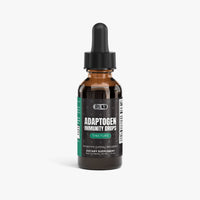
This is the principle behind our Adaptogen Immunity Drops, which include both Chaga and Reishi as part of a broader immune complex—designed so you don't have to choose one or the other.
If you prefer single-ingredient specificity, you can run them in parallel: Chaga Capsules in the morning for targeted immune and antioxidant support, Reishi Relax Gummies in the evening as your wind-down anchor. And for nighttime relaxation support, our Reishi Calm Drops offer another liquid-format option. Different products, different times, different goals—one routine.
The Bottom Line
Chaga and Reishi aren't the same mushroom wearing different labels. They're biochemically distinct organisms with different traditional histories, different compound strengths, and different places in a wellness routine. Chaga is the resilience anchor—polysaccharide-dense, melanin-rich, rooted in Siberian daily practice. Reishi is the calm anchor—triterpene-rich, deeply traditional, rooted in 2,000 years of TCM as the "spirit mushroom."
Understanding the difference means you can make an informed choice: one or the other for a specific goal, or both for broader coverage. Either way, you deserve to make that decision with clear information about what each mushroom contains, what the traditions say, and where the evidence currently stands—not with marketing that treats them as interchangeable.
References
Note: These citations reflect ingredient-level research, not finished-product claims.
- Shashkina MY, Shashkin PN, Sergeev AV. Chemical and medicobiological properties of Chaga (review). Pharm Chem J. 2006;40(10):560–568.
- Kou RW, et al. Triterpenoids and meroterpenoids from the genus Inonotus and their biological activities. J Nat Prod. 2021;84(10):2895–2916.
- Boh B, Berovic M, Zhang J, Zhi-Bin L. Ganoderma lucidum and its pharmaceutically active compounds. Biotechnol Annu Rev. 2007;13:265–301.
- Wachtel-Galor S, Yuen J, Buswell JA, Benzie IFF. Ganoderma lucidum (Lingzhi or Reishi): a medicinal mushroom. In: Benzie IFF, Wachtel-Galor S, editors. Herbal Medicine: Biomolecular and Clinical Aspects. 2nd edition. Boca Raton: CRC Press/Taylor & Francis; 2011.
RELATED PRESS RELEASE
GlobeNewsWire The Pilly Labs Chaga Mushroom Formula Leading the Way for Potency & Purity