

Turkey Tail Mushroom: What the Immune Wellness Research Suggests
Turkey Tail is arguably the most studied functional mushroom on Earth. It's also the most misrepresented in supplement marketing. The gap between those two facts is where an honest conversation has to begin.
If you search for Turkey Tail supplements online, you'll find product pages vaguely referencing research that is real and substantial. What they almost never explain is that the most compelling Turkey Tail research exists in a clinical context that dietary supplement companies are legally prohibited from claiming. Understanding that distinction is the difference between being an informed consumer and being a marketing target.
What Turkey Tail Is
Turkey Tail (Trametes versicolor) is a polypore mushroom that grows on dead and decaying hardwood across every continent except Antarctica. Its common name comes from the concentric bands of brown, tan, cream, and gray that fan out from its base, resembling a wild turkey's tail feathers. It's one of the most abundant and widely distributed fungi in the world.
In China, Turkey Tail has been known as yun zhi ("cloud mushroom") and used in traditional wellness practices for centuries, typically prepared as a hot water decoction. In Japan, where it's called kawaratake, it has an equally long history as a wellness tonic. Across both traditions, Turkey Tail was valued not as a treatment for specific conditions but as a general vitality support—something consumed regularly to help maintain everyday resilience.
The Key Bioactive Compounds: PSK and PSP
What makes Turkey Tail scientifically distinctive are two well-characterized protein-bound polysaccharides: polysaccharopeptide Krestin (PSK) and polysaccharopeptide (PSP).
PSK is a beta-glucan-protein complex first isolated from Turkey Tail in Japan in the 1970s. It has been studied extensively over five decades, making it one of the most researched mushroom-derived compounds in the scientific literature. Critically, PSK has a specific regulatory history in Japan as a pharmaceutical-grade product—a detail we'll return to shortly.
PSP was later isolated from Turkey Tail strains cultivated in China. Like PSK, it's a protein-bound polysaccharide with a beta-glucan backbone, and it has been the subject of substantial laboratory and preclinical research.
Both compounds interact with the immune system in ways characterized at the cellular level. In vitro research suggests that PSK and PSP may influence immune cell activity, including natural killer (NK) cell function, macrophage activation, and cytokine signaling. These interactions are mediated in part through pattern recognition receptors—including Toll-like receptors and Dectin-1—which recognize the beta-glucan structures in these polysaccharides.1
The Research Landscape: An Honest Assessment
This is where we need to be precise.
Turkey Tail—specifically its PSK and PSP fractions—has an unusually large body of published research. Multiple systematic reviews and meta-analyses have examined this research base, and the evidence is substantial in scale.2 A Cochrane-affiliated review similarly found a significant body of published work on Turkey Tail polysaccharides.3
Most supplement marketing stops here. We need to keep going.
The Adjunctive Research Context
The vast majority of the most rigorous Turkey Tail clinical research was conducted in a specific context: as an adjunctive intervention alongside conventional medical treatments. PSK was studied in Japan as a pharmaceutical adjunct, not as a standalone dietary supplement for healthy individuals.
This distinction isn't a technicality. Under the Dietary Supplement Health and Education Act (DSHEA) and FTC advertising guidelines, supplement companies can't make claims based on research conducted in disease-treatment contexts. A supplement is not a drug. Research on pharmaceutical-grade PSK administered alongside medical interventions in clinical populations doesn't validate a whole-mushroom extract as an immune supplement for healthy adults. For more on what DSHEA means for supplement labels, see our label-reading guide.
We're being explicit about this because most Turkey Tail brands aren't. The most impressive Turkey Tail research exists in contexts that are legally and ethically off-limits for supplement claims. Pretending otherwise misleads consumers.
Research in Healthy Adults
The research specifically examining Turkey Tail in healthy adults is considerably smaller in scope. Some preliminary studies have investigated the effects of Turkey Tail extracts on immune biomarkers—including NK cell activity, lymphocyte counts, and immunoglobulin levels—in healthy volunteers. A pilot study published in ISRN Oncology evaluated a Turkey Tail preparation and observed dose-dependent changes in certain immune cell markers.4 These findings suggest that Turkey Tail polysaccharides may support aspects of normal immune function.
However, this healthy-population research base remains limited. The studies tend to be small, methodologically varied, and insufficient for firm conclusions. This is the honest state of the evidence for Turkey Tail as a general immune wellness supplement: suggestive, grounded in plausible mechanisms, supported by centuries of traditional use, but awaiting larger, well-controlled human trials in healthy populations.
Traditional Use: Real Evidence, Different Evidence
Centuries of use in Chinese and Japanese wellness traditions carry genuine weight. Practitioners across multiple cultures, working independently, converged on the same conclusion: Turkey Tail supported general vitality and everyday resilience. That cross-cultural, multi-generational observation is meaningful.
It's also different from controlled clinical evidence. Traditional use tells us that people consumed Turkey Tail safely over long periods and valued its effects enough to continue. It doesn't tell us mechanism, dose-response, or specific measurable outcomes. Both forms of evidence have value. Conflating them doesn't help anyone make informed choices.
Safety Profile
Turkey Tail has a favorable safety profile based on its extensive history of human consumption and available clinical data. Adverse events in studies have generally been mild and gastrointestinal—occasional bloating, darkened stools, or digestive discomfort. No serious safety signals have emerged at standard supplemental doses.
Individuals who are pregnant, nursing, taking immunosuppressive medications, or managing autoimmune conditions should consult their healthcare provider before use. Turkey Tail's proposed immune-modulating activity warrants this precaution for anyone whose immune regulation is medically managed.
Why Turkey Tail Appears in Multi-Mushroom Immune Blends
Different mushroom species produce beta-glucans with distinct molecular architectures. A multi-species formulation may provide a broader range of polysaccharide structures interacting with immune cell receptors through complementary pathways. Turkey Tail's PSK and PSP represent one structural profile. Chaga's polysaccharides offer another. Reishi contributes both polysaccharides and triterpenoids. Maitake brings its D-fraction beta-glucans. Shiitake provides lentinan. The multi-species approach is about structural diversity, not ingredient duplication.
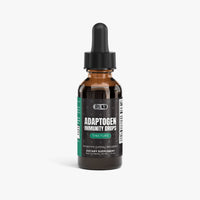
This reasoning drives Turkey Tail's inclusion in several Pilly Labs formulations. In the Adaptogen Immunity Drops, Turkey Tail is part of the 150mg immune complex alongside Chaga, Reishi, Maitake, and Shiitake—five species with distinct polysaccharide profiles. In the 10-Mushroom Blend Gummies, Turkey Tail is one of ten species providing broad-spectrum traditional mushroom support. And in the Reishi Calm Drops, Turkey Tail contributes to the 50mg immune complex, playing a supporting role alongside Reishi's primary adaptogenic profile.
In each case, Turkey Tail is included for what it is: a traditional immune wellness ingredient with one of the most extensively studied polysaccharide profiles in the mushroom kingdom—not for claims the evidence doesn't yet support in a supplement context.
The Bottom Line
Turkey Tail is a genuinely remarkable mushroom. Its PSK and PSP compounds are among the most researched bioactive molecules from any fungal species. Its traditional use in Chinese and Japanese wellness practices spans centuries. The mechanistic research on its polysaccharide-immune cell interactions is well-characterized.
It's also a mushroom whose most impressive research belongs to a clinical context that supplement companies can't—and shouldn't—claim. Being transparent about that boundary isn't a weakness. It's the foundation of trust. The brands willing to tell you what they can't claim are the brands most likely to be honest about what they can.
Turkey Tail, consumed as a traditional wellness ingredient or as part of a well-formulated mushroom supplement, may support normal immune function as part of an overall wellness routine. That's a measured claim. It's also an honest one. If you're interested in how Chaga and Reishi compare as complementary immune wellness ingredients, read our Chaga vs. Reishi comparison.
References
- Saleh MH, Rashedi I, Keating A. Immunomodulatory properties of Coriolus versicolor: the role of polysaccharopeptide. Front Immunol. 2017;8:1087. PMID: 28932226
- Fritz H, Kennedy DA, Ishii M, et al. Polysaccharide K and Coriolus versicolor extracts for lung cancer: a systematic review. Integr Cancer Ther. 2015;14(3):201-211. PMID: 25784670
- Eliza WL, Fai CK, Chung LP. Efficacy of Yun Zhi (Coriolus versicolor) on survival in cancer patients: systematic review and meta-analysis. Recent Pat Inflamm Allergy Drug Discov. 2012;6(1):78-87. PMID: 22185453
- Torkelson CJ, Sweet E, Martzen MR, et al. Phase 1 clinical trial of Trametes versicolor in women with breast cancer. ISRN Oncol. 2012;2012:251632. PMID: 23304525
RELATED PRESS RELEASE
GlobeNewsWire The Pilly Labs Chaga Mushroom Formula Leading the Way for Potency & Purity